(614) 802-6549
  Mon - Fri: 8:00am To 5:00pm
  Leave Us a Google Review!
Auto Diagnostics and Check Engine Light Diagnosis

Find the Cause, Then Fix It
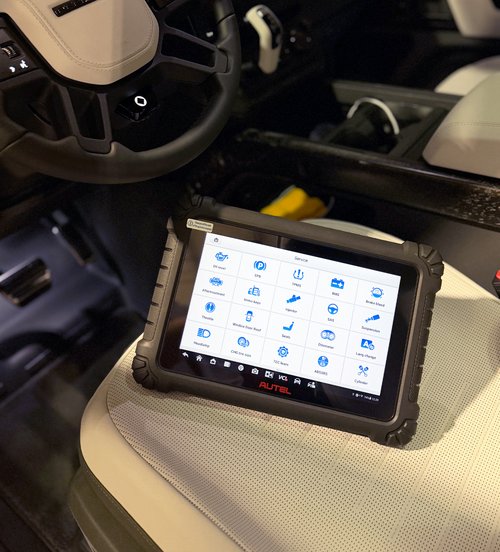
Diagnostics at Tizzano Automotive
A warning light or a drivability complaint is the beginning of a question, not the answer to one. Diagnosis is the work of turning "the light is on" into "this component, in this circuit, is doing this." It takes test equipment, manufacturer test procedures and time, and it is the part of the job that decides whether the repair actually fixes anything.
Diagnostic Work Includes:- Check engine light and emissions-related fault diagnosis
- Drivability complaints including misfires, rough idle, stalling and hesitation
- ABS, traction control and other warning light diagnosis
- Electrical faults including no-start, battery drain and charging problems
You hear what was found, how it was confirmed and what the repair involves before any work is approved. Nick does the diagnosis and the repair himself, so nothing is lost between the person who tested it and the person who fixes it.
Call to Schedule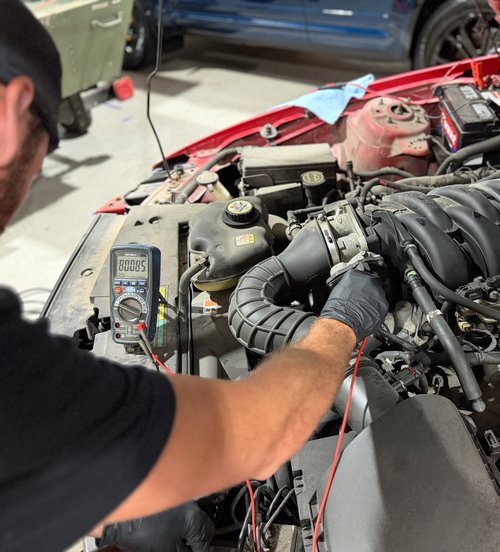
A Trouble Code Is a Starting Point
Most parts stores will read a stored code for free, and that is genuinely useful information. What it is not is a diagnosis. A code such as P0171 says the engine is running lean on bank one. It does not say whether that is a vacuum leak, a dirty mass airflow sensor, a weak fuel pump, a leaking injector or an exhaust leak ahead of the oxygen sensor. Replacing the part named in the code description is how people end up paying for the same repair twice.
A Real Diagnosis Involves:- Reading stored codes with freeze frame data, which records what the engine was doing when the fault set
- Watching live data while the fault is happening, not just at idle in the bay
- Testing the suspect circuit or component directly with a meter or scope
- Following the manufacturer test procedure for that code on that vehicle
- Inspecting wiring, connectors and grounds before condemning a part
- Verifying the repair before the vehicle leaves the shop
Diagnostic time is real work and it is charged as such. What you get for it is a specific answer and a repair aimed at the cause, rather than a list of parts to try in order until the light stays off.
Lights, Noises and the Ones That Are Hard to Describe
- 01
Check engine and emissions lights
From a loose fuel cap to a failing catalytic converter, these codes cover an enormous range. Testing is what separates the cheap causes from the expensive ones before you spend anything.
- 02
Misfires, rough idle and stalling
Drivability complaints usually come down to fuel, spark, air or compression. Narrowing which of the four is at fault is most of the work, and it saves replacing the other three.
- 03
ABS, traction and stability warnings
When one of these lights is on, the system has logged a fault and shut itself off. A wheel speed sensor, its wiring or a damaged tone ring are common causes, and each needs testing rather than guessing.
- 04
No-start, battery drain and charging
A car that will not start is not automatically a battery. Testing separates a failing battery from a charging fault, a bad connection or a parasitic drain pulling the battery down overnight.
- 05
Noises, vibrations and handling changes
A hum that rises with speed, a clunk over bumps or a shudder under braking each point somewhere different. A road test with someone who knows what to listen for narrows it quickly.
- 06
Leaks, overheating and cooling faults
Finding where a leak originates matters more than seeing where it lands. Overheating in particular is worth diagnosing promptly, because the secondary damage gets expensive fast.
How a Diagnosis Runs
The order matters. Skipping straight from a code to a parts counter is what produces repeat repairs.
- 01
Confirm the Complaint
We start with what you noticed: when it happens, at what speed or temperature, and whether it is constant or comes and goes. That detail narrows the search faster than anything else.
- 02
Read Codes and Conditions
Stored codes get pulled along with freeze frame data, which captures what the engine was doing at the moment the fault set. That context is often more useful than the code itself.
- 03
Test, Do Not Assume
The suspect circuit or component gets tested directly. That is what separates a cause from a coincidence, which matters most when several codes are stored at once.
- 04
Report Before Repair
You get the finding, how it was confirmed and what the repair involves. Nothing gets replaced until you have said to go ahead.
Diagnostic Questions
A steady light generally means the vehicle has logged a fault worth looking at soon rather than pulling over immediately. A flashing light is a different matter: it usually indicates a misfire severe enough to damage the catalytic converter, and continuing to drive can turn a modest repair into an expensive one.
Because pulling a stored code takes seconds with an inexpensive scanner. It tells you a fault exists and roughly which system it sits in, which is worth knowing. The testing that identifies which component actually failed is a separate job, and it is the part that determines whether your repair works.
Often, yes, though intermittent faults take longer by their nature. Freeze frame data and live recording help capture conditions that are not present while the car sits in the bay. Anything you can tell us about when it happens, cold mornings or highway speed for example, genuinely helps.
Sometimes. It depends on what the testing finds and whether the parts are on hand. We will tell you what was found and what it needs, and go from there rather than promising a timeline before we know what we are dealing with.
Bring it in anyway. Codes normally stay in memory after the light clears, along with the freeze frame data from when the fault set, so there is usually still something to work from.
Yes. Diagnostic time is skilled work with test equipment behind it, and charging for it is what makes it worth doing properly instead of guessing. You will know the cost before we start rather than finding out afterwards.
Where a Diagnosis Usually Leads
Brake Repair
ABS faults and brake warning lights start as diagnostic work and often finish as a brake repair.
Brake RepairSuspension & Steering
Noise and vibration complaints are diagnosed on a road test and a lift, and frequently trace back to a worn suspension component.
Suspension & SteeringGeneral Mechanical Repair
Cooling, charging, fuel delivery and exhaust faults all begin with testing before any part is ordered.
General Repair




Skip the Service Advisor.
Talk to the Tech.
At Tizzano Automotive, you get direct access to 12 years of professional experience. Call, text, or fill out our contact form to discuss your vehicle’s needs and schedule your service.